The Windsor Framework is one of the most significant trade agreements affecting UK logistics since Brexit. Introduced in 2023, it aims to reduce trade friction between Great Britain and Northern Ireland while maintaining protections for the EU single market.
For the haulage industry, the framework has real operational implications. It affects how goods move across the Irish Sea, the customs processes required for shipments, and the way logistics providers manage compliance when transporting freight into Northern Ireland.
Haulage companies, freight forwarders, retailers, and logistics hubs all need to understand how the Windsor Framework works. From the introduction of green lanes and red lanes to the use of trusted trader schemes, the agreement changes the way freight is handled between Great Britain and Northern Ireland.
This guide explains the Windsor Framework in practical terms and explores what it means for haulage companies operating within UK–Ireland supply chains.
What we’ll cover
Fleets, bookings, subcontractors, compliance & payments.
With HX, you can manage them all in one place.
Why the Windsor Framework was introduced
To understand the Windsor Framework, it’s important to look at the trade arrangements that followed Brexit.
When the UK left the European Union, it also left the EU’s customs union and single market. This meant goods moving between the UK and EU would normally require customs checks and regulatory controls.
However, Northern Ireland occupies a unique position. It shares a land border with the Republic of Ireland, which remains an EU member state. Introducing customs checks at that land border risked disrupting the Good Friday Agreement, which relies on an open border between the two parts of Ireland.
To avoid this, the UK and EU agreed that Northern Ireland would remain aligned with certain EU goods regulations. This arrangement became known as the Northern Ireland Protocol.
While this solution kept the Irish land border open, it created a new challenge for logistics.
Goods travelling from Great Britain to Northern Ireland were effectively entering the EU single market. As a result, new customs declarations and regulatory checks were introduced at ports handling Irish Sea freight.
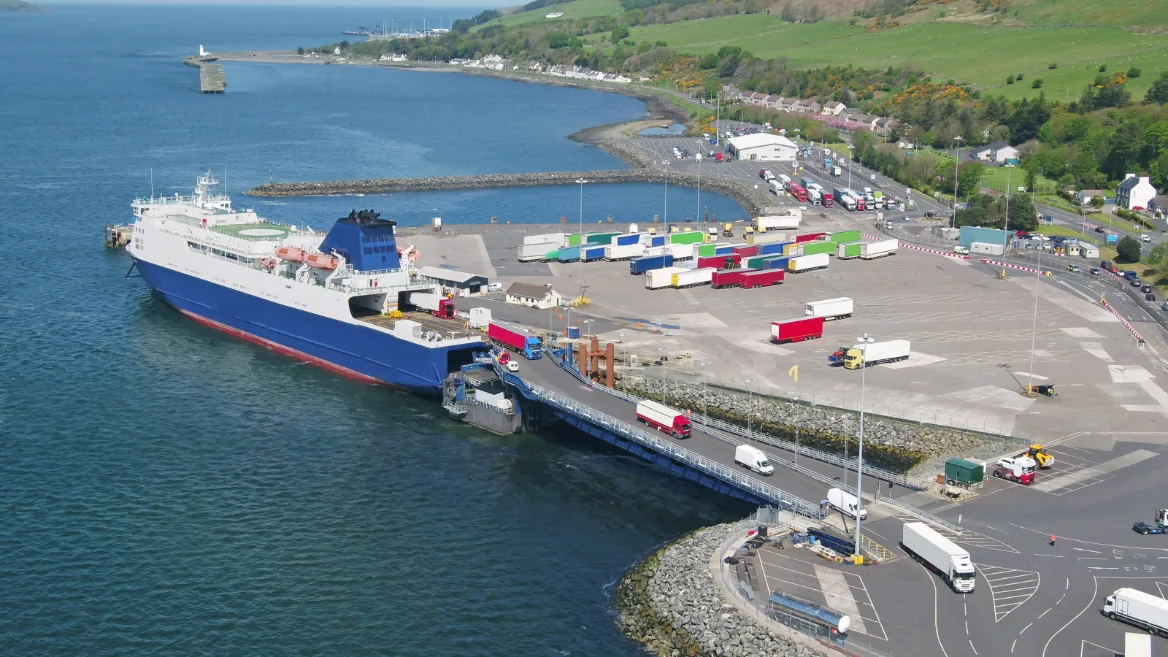
Ports such as Port of Belfast and Port of Larne became the points where these processes took place.
For businesses moving goods between Great Britain and Northern Ireland, the system created additional administrative work and sometimes caused delays. Retailers, manufacturers and haulage companies reported difficulties managing paperwork, especially when transporting mixed loads with different regulatory requirements.
The Windsor Framework was negotiated to address these problems while preserving the core structure of the Northern Ireland Protocol.
What is the Windsor Framework?
The Windsor Framework was announced in February 2023 following negotiations between the Government of the United Kingdom and the European Union.
Rather than replacing the Northern Ireland Protocol, the framework modifies how it operates in practice. Its goal is to make the movement of goods between Great Britain and Northern Ireland easier while still ensuring that goods entering the EU single market meet EU standards.
For the logistics industry, the most important change introduced by the Windsor Framework is the green lane and red lane system for freight.
This system separates goods based on their final destination:
- Green lane: goods that will remain in Northern Ireland
- Red lane: goods that could enter the EU via the Republic of Ireland
By separating shipments this way, the framework allows many goods moving within the UK internal market to benefit from simplified procedures and fewer checks.
The agreement also introduced trusted trader schemes and expanded the use of digital data sharing between authorities.
Together, these measures aim to reduce bureaucracy and improve the efficiency of UK–Northern Ireland trade.
Green lanes and red lanes explained
The introduction of green lanes and red lanes is the most visible operational change created by the Windsor Framework.
This system is designed to reduce friction for goods moving within the UK while maintaining safeguards for EU markets.
Green lanes
Green lanes apply to goods travelling from Great Britain to Northern Ireland that are intended to stay within Northern Ireland.
For these shipments, the Windsor Framework introduces simplified processes designed to make trade easier for businesses operating within the UK internal market.
Key features of green lane movements include:
- Reduced customs declarations
- Fewer regulatory checks at ports
- Simplified documentation requirements
- Digital reporting instead of full customs processes
This approach particularly benefits supply chains that regularly transport goods to Northern Ireland for local distribution, such as supermarket deliveries, construction materials, consumer products and retail stock.
For haulage companies involved in these supply chains, the green lane system can reduce administrative workload and speed up the movement of freight through ports.
Many large retailers rely on regular shipments from distribution centres in Great Britain to stores across Northern Ireland. Under the Windsor Framework, these movements are now treated more like domestic UK logistics rather than international trade.
Red lanes
Red lanes apply to goods that may enter the EU single market. This includes shipments that could travel from Northern Ireland into the Republic of Ireland or be sold to EU customers.
Because these goods may enter the EU market, they must continue to meet EU customs and regulatory requirements.
Red lane shipments require:
- Full customs declarations
- Regulatory compliance checks
- Documentation confirming product standards
- Possible physical inspections at ports
For haulage operators transporting goods that could move beyond Northern Ireland, the process remains similar to traditional international freight procedures.
The separation between green lane and red lane shipments allows regulators to focus checks on goods that pose a potential risk to the EU single market, while allowing domestic UK trade to flow more smoothly.
What the Windsor Framework means for haulage companies
While the Windsor Framework is often discussed in political terms, its real impact is felt in day-to-day logistics operations.
For haulage companies transporting goods between Great Britain and Northern Ireland, the framework changes how freight is declared, monitored and processed at ports.
Less paperwork for domestic Northern Ireland supply chains
One of the biggest benefits for logistics operators is the reduction in paperwork for shipments that remain within Northern Ireland.
Under the original Northern Ireland Protocol, many goods travelling from Great Britain to Northern Ireland required full customs declarations even if they were destined for local consumption.
The Windsor Framework reduces these requirements for green lane shipments, allowing goods moving within the UK internal market to pass through ports with fewer formalities.
For haulage companies transporting retail or wholesale goods to Northern Ireland, this can translate into:
- Faster processing times at ports
- Fewer administrative tasks for logistics teams
- Reduced delays in supply chains
This is particularly important for industries such as food distribution and retail logistics, where goods move frequently between distribution centres and stores.
Managing groupage and mixed loads
Groupage loads – trailers carrying multiple consignments from different suppliers – are common in freight transport between the Great Britain and Northern Ireland.
Under previous arrangements, mixed loads created complications because some goods might require EU checks while others did not.
The Windsor Framework introduces clearer processes for classifying goods and determining which lane they belong to.
However, logistics operators still need to ensure they understand the final destination of each shipment within a trailer. Accurate documentation and digital reporting remain essential for compliance.
For many haulage companies, this means continuing to rely on customs systems, logistics software and supply chain data to track shipments correctly.
Ongoing compliance requirements
Although the Windsor Framework simplifies many procedures, it does not remove the need for compliance.
Haulage companies must still ensure that shipments are correctly declared and that goods using green lanes genuinely remain within Northern Ireland.
Operators working with retailers and manufacturers may need to provide shipment data, verify destinations and maintain accurate documentation.
For logistics providers operating across UK and EU supply chains, this means balancing efficiency with regulatory compliance.

Trusted trader schemes and logistics compliance
A key part of the Windsor Framework is the use of trusted trader programmes.
Businesses moving goods through the green lane must be registered under schemes designed to verify that their shipments comply with the rules of the UK internal market.
One of the most important programmes is the UK Internal Market Scheme.
Companies registered under this scheme must demonstrate that goods transported into Northern Ireland are intended to remain there and will not be diverted into EU markets.
For logistics providers and haulage companies, this means working closely with suppliers, retailers and distributors who are registered under the scheme.
Compliance requirements may include:
- Maintaining accurate shipment records
- Providing data on supply chains
- Confirming the intended destination of goods
While this system introduces additional monitoring requirements, it allows trusted operators to benefit from simplified green lane procedures.
For many logistics networks, participation in these schemes is essential to maintain efficient supply chains between Great Britain and Northern Ireland.
How it affects UK–Ireland freight routes
The Windsor Framework also has wider implications for logistics networks serving the UK and Ireland.
Irish Sea freight routes play a critical role in connecting supply chains between Great Britain, Northern Ireland and the Republic of Ireland. Many companies operate regular trunking services linking distribution centres in Britain with logistics hubs across the island of Ireland.
Changes to customs procedures can affect route planning, port operations and freight volumes.
By reducing bureaucracy for goods that remain within Northern Ireland, the Windsor Framework aims to improve the flow of goods through key ports and reduce congestion in logistics networks.
At the same time, goods moving from Northern Ireland into the Republic of Ireland still need to meet EU customs requirements. This means freight operators involved in cross-border trade must continue to manage customs documentation and compliance.
For logistics providers managing supply chains that span both markets, the ability to accurately classify shipments and manage regulatory processes remains essential.
The framework also highlights the growing importance of digital data in freight transport. Customs systems, electronic documentation and supply chain visibility tools are increasingly used to manage trade flows efficiently.
Remaining challenges for the haulage industry
Although the Windsor Framework simplifies some aspects of trade, it does not eliminate all complexity.
Haulage companies still need to navigate regulatory requirements and ensure that goods are correctly classified when entering Northern Ireland.
Smaller logistics operators may find compliance processes challenging, particularly if they lack dedicated customs expertise or digital systems for managing trade documentation.
There is also ongoing debate within the logistics sector about the long-term impact of the framework. Some businesses welcome the reduction in bureaucracy, while others believe the system still introduces unnecessary complexity compared with pre-Brexit trade.
For freight operators working across UK and EU markets, adapting to evolving regulations remains part of normal business operations.
The future of the Windsor Framework and logistics
The Windsor Framework represents an attempt to balance two priorities: maintaining open trade within the UK internal market while protecting the EU single market.
For the logistics sector, the agreement highlights how trade rules and supply chains are increasingly interconnected.
Digital customs systems, supply chain tracking technologies and improved data sharing between authorities are likely to play an increasingly important role in the years ahead.
Haulage companies operating across UK–Ireland routes will need to remain flexible and informed about regulatory developments. As trade arrangements evolve, logistics providers that invest in compliance systems and supply chain visibility will be best positioned to adapt.
Windsor Framework FAQs
What is the Windsor Framework in simple terms?
The Windsor Framework is a trade agreement between the UK and the EU that changes how goods move between Great Britain and Northern Ireland. It modifies the Northern Ireland Protocol introduced after Brexit. Its main goal is to reduce trade friction while protecting the EU single market.
How does the Windsor Framework affect haulage companies?
The Windsor Framework changes how freight is declared and processed when moving from Great Britain to Northern Ireland. It introduces a green lane and red lane system that determines what checks and paperwork are required. For many domestic shipments, this means fewer customs formalities and faster movement through ports.
What are green lanes and red lanes under the Windsor Framework?
Green lanes are used for goods travelling from Great Britain to Northern Ireland that will remain within Northern Ireland. These shipments benefit from reduced paperwork and fewer checks. Red lanes apply to goods that may enter the EU market, which still require full customs procedures.
Does the Windsor Framework replace the Northern Ireland Protocol?
No, the Windsor Framework does not replace the Northern Ireland Protocol. Instead, it modifies how the protocol works in practice to reduce trade barriers between Great Britain and Northern Ireland. The underlying legal framework of the protocol still remains in place.
Do hauliers still need customs declarations under the Windsor Framework?
In many cases, yes, although the requirements may be simplified for goods travelling through green lanes. Shipments that could enter the EU market must still complete full customs declarations. Haulage companies must ensure goods are correctly classified to determine which procedures apply.
Why was the Windsor Framework introduced after Brexit?
After Brexit, the Northern Ireland Protocol introduced new checks on goods moving between Great Britain and Northern Ireland. Businesses and logistics operators reported that these processes created delays and extra administration. The Windsor Framework was introduced to simplify trade while maintaining the open border between Northern Ireland and the Republic of Ireland.