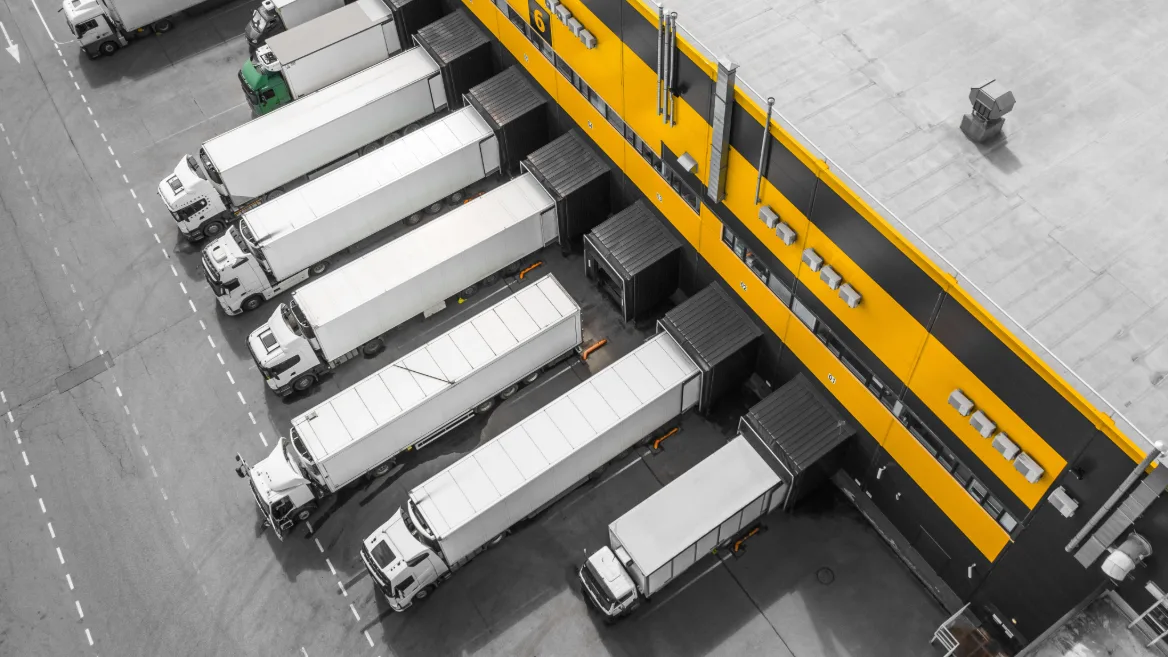
Trunking in logistics refers to the long-distance movement of consolidated freight between major depots, hubs or distribution centres. Rather than making multiple delivery drops, trunking vehicles transport large volumes of goods from one central point to another, forming the backbone of national freight networks.
In UK road transport, trunking is typically carried out by articulated HGVs running motorway-based routes, often overnight. Freight is collected regionally, grouped at a depot, transported via a trunk route to another hub, and then distributed locally.
For many operators, trunking in logistics isn’t just a transport function, it’s a core revenue stream built around repeat lanes, scheduled departures and predictable volumes.
What we’ll cover
Fleets, bookings, subcontractors, compliance & payments.
With HX, you can manage them all in one place.
How haulage trunking works in the UK
Haulage trunking is structured around efficiency, consolidation and timing. While models vary between operators and networks, most follow one of three core formats.
Depot-to-depot trunking
This is the most common format. Freight is:
- Collected locally during the day
- Consolidated at a regional depot
- Loaded onto an artic for onward movement
- Transported to a national or regional hub
- Sorted again for final delivery
The trunk vehicle does not typically make en-route drops. Its role is purely long-distance transfer between fixed points.
Relay trunking
Relay trunking allows longer routes to be covered while keeping drivers within legal hours.
Two drivers meet at a midpoint location, swap trailers, and return to their original depots. This model:
- Reduces the need for overnight stays
- Keeps vehicles moving continuously
- Maximises utilisation of both tractor units and trailers
Relay systems are common in time-critical networks where next-day delivery performance is essential.
Night trunking operations
A large proportion of trunking in logistics happens overnight. Running at night:
- Reduces motorway congestion
- Improves journey time reliability
- Ensures freight is positioned for early-morning sortation
For pallet and parcel networks, night trunks are fundamental to maintaining service levels.
What is HGV trunking?
HGV trunking refers specifically to trunk operations carried out by heavy goods vehicles — typically Class 1 articulated lorries.
From a vehicle and driver perspective, HGV trunking often involves:
- Motorway-based driving
- Trailer swaps rather than manual unloading
- Fixed or repeat routes
- Time-sensitive departures and arrivals
- Minimal customer-facing interaction
Because loads are consolidated at hubs, drivers are rarely handling individual consignments. The emphasis is on punctuality, safe driving and maintaining schedule integrity.
For drivers, HGV trunking can offer structured shifts and consistent lanes. For operators, it provides a scalable way to move high volumes efficiently.
Why trunking in logistics is so important
Trunking is one of the key parts of national freight coverage. Without it, regional collection and final-mile delivery networks would struggle to function at scale.
Its importance lies in several key areas:
National connectivity
Trunk routes link regional depots into cohesive logistics networks, allowing operators to move freight across the UK without needing to maintain depots in every location.
Consolidation efficiency
By grouping freight into full trailer loads between logistics hubs, operators can reduce empty or part running and make the most of their vehicles while on the road.
Time-definite performance
Scheduled trunk departures enable next-day and timed delivery services. Reliability at trunk level directly affects service performance downstream.
Fleet utilisation
Fixed trunk lanes allow better planning of vehicles and drivers. Predictable movements reduce uncertainty in scheduling and capacity allocation.
In short, trunking in logistics creates structure within complex freight networks.
The commercial value of haulage trunking
For many operators, haulage trunking provides financial stability alongside operational efficiency.
Predictable revenue
Trunk contracts often involve fixed lanes and agreed schedules. This can generate consistent income, particularly when tied to network commitments or long-term agreements.
Improved planning
Repeat routes allow operators to:
- Allocate vehicles more effectively
- Optimise driver rotas
- Forecast fuel and maintenance requirements
Consistency reduces reactive planning.
Reducing empty running
Strategic trunking can improve backhaul opportunities. An operator running a scheduled trunk may use freight exchanges or network freight to fill return legs, improving overall margin.
Scaling without new depots
Trunking allows fleet managers and haulage companies to participate in national networks without expanding physical infrastructure. Access to trunk lanes can support growth while controlling fixed costs.
For businesses looking to balance contracted stability with flexible spot work, trunk operations can form a reliable base layer of activity.
Challenges in trunking operations
While trunking offers stability, it also comes with operational pressures.
Fuel cost exposure
Long motorway runs mean fuel represents a significant proportion of operating cost. Small fluctuations can materially impact margin on fixed-rate lanes.
Driver availability
Night trunking in particular depends on drivers willing to work unsociable hours. HGV driver recruitment and retention can affect continuity.
Strict timing
Trunk schedules are often tightly controlled. Delays at departure or arrival hubs can disrupt entire networks, leading to knock-on service issues.
Asset downtime
Because trunk routes are repeat and time-critical, vehicle breakdowns can have immediate operational impact. Maintenance planning must be robust.
Understanding these risks is essential before committing fleet capacity to trunk operations.
Is trunking in logistics right for your haulage business?
Trunking suits operators who:
- Run motorway-capable articulated fleets
- Can commit to fixed schedules
- Have drivers available for night or relay work
- Want more predictable lane revenue
- Are looking to improve overall fleet utilisation
It may be less suitable for operators focused solely on ad hoc regional work or highly specialised transport.
Final thoughts
Trunking in logistics remains the backbone of UK freight movement. By connecting regional depots and national hubs, it enables scale, reliability and efficiency across haulage networks.
Whether structured as depot-to-depot runs, relay systems or overnight hub connections, HGV trunking and broader haulage trunking operations provide the infrastructure that keeps goods moving nationwide.
For many operators, trunk lanes offer a balance of stability and opportunity — predictable revenue combined with the flexibility to optimise capacity around core routes. In a market where utilisation and margin control are more important than ever, trunking continues to play a central role in sustainable haulage operations.
FAQs about trunking
What does trunking mean in logistics?
Trunking in logistics refers to the long-distance movement of consolidated freight between major depots or hubs. Instead of making multiple delivery drops, trunk vehicles transport full trailer loads between fixed points, forming the backbone of national haulage networks.
What is HGV trunking?
HGV trunking is trunking work carried out by heavy goods vehicles, usually articulated lorries (Class 1). It typically involves motorway-based driving between depots, scheduled departures, trailer swaps, and minimal manual handling.
How does haulage trunking work in the UK?
Haulage trunking in the UK usually operates on a depot-to-depot model. Freight is collected locally, consolidated at a regional hub, transported overnight via trunk routes, and then sorted for final delivery at the destination depot. Many trunk operations run at night to support next-day services.
Is trunking only done at night?
Not always, but much of trunking in logistics takes place overnight. Night operations reduce congestion, improve reliability, and allow freight to be sorted early the next morning. Some dedicated trunk routes, however, operate during the day depending on contract requirements.
Is trunking profitable for haulage companies?
Trunking can be profitable when rates, fuel costs, and utilisation are managed effectively. Fixed lanes and repeat contracts provide predictable income, while careful backhaul planning can reduce empty running and improve margins.