Certain locations across the UK have become all-important to the smooth flow of goods, offering fast access to major roads, rail links, ports, and airports. These logistics hubs handle millions of tonnes of cargo each year, keeping everything from supermarket shelves to factory lines stocked and moving.
For freight operators, choosing the right hub can impact delivery times, storage costs, and long-term growth. In this article, we’ll explore the UK’s largest and most important logistics hubs, and why they’re essential to the country’s transport network.
What we’ll cover
Fleets, bookings, subcontractors, compliance & payments.
With HX, you can manage them all in one place.
What counts as a logistics hub?
A logistics hub is more than just a warehouse. It’s a location where goods are stored, sorted, and transferred between different transport modes.
These hubs connect road, rail, air or sea networks and offer 24/7 access. They also support services such as customs clearance, temperature-controlled storage, and freight consolidation.
Successful hubs tend to offer the following:
- Proximity to major motorways or ports
- Road layouts suitable for HGVs and large haulage business operations
- Intermodal transport links, such as rail freight terminals or airport access
- On-site or nearby warehousing and dispatch centres
- Reliable workforce and infrastructure support
For anyone starting a haulage company or scaling operations, location is of the utmost importance. Choosing the right hub can directly affect delivery times and operational costs.
Ranked: The UK’s largest logistics hubs
From deep-sea ports to inland freight terminals, the UK is home to several large logistics hubs supporting national and international supply chains. These sites combine warehousing, transport access, and dispatch operations to keep goods moving efficiently.
1. Midlands Golden Triangle (East Midlands)

The Golden Triangle covers an area between Birmingham, Nottingham, and Leicester. It’s known for its dense concentration of warehouses and logistics parks.
This region sits at the heart of the motorway network with the M1, M6, and M40 nearby. It also offers quick access to over 90% of the UK population within a four-hour drive.
Major sites include Magna Park, Hinckley Park and East Midlands Gateway. The latter combines rail freight, warehousing, and airport connections in one integrated site.
The Golden Triangle is ideal for fast-moving goods, retail distribution, and national supply chain networks. Its central location makes it one of the most valuable areas for multimodal logistics.
2. DIRFT (Daventry International Rail Freight Terminal)
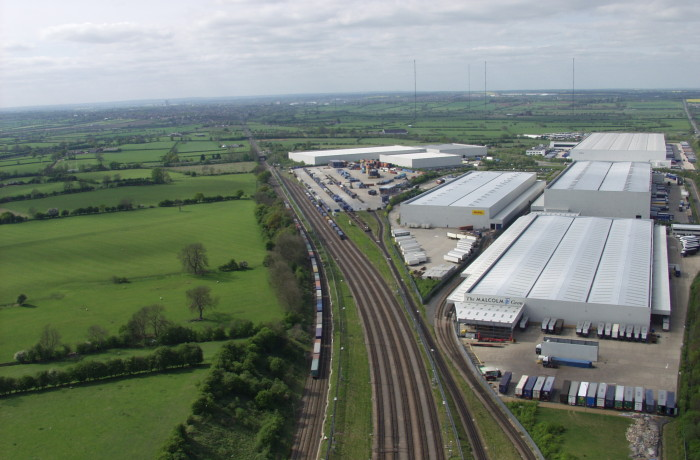
DIRFT is one of the UK’s most advanced inland intermodal transport terminals. It sits just off the M1 in Northamptonshire, connecting road and rail networks.
This hub allows for efficient freight movement from the Channel Tunnel and major ports to inland destinations. It plays a huge role in reducing road congestion by shifting volume to rail.
DIRFT is surrounded by large warehouses and dispatch centres used by leading supermarkets and retailers. It is particularly strong in grocery logistics and time-sensitive supply chains.
The terminal is constantly expanding, too. It continues to grow as a hub for freight forwarders seeking reliability and scale.
3. Port of Felixstowe
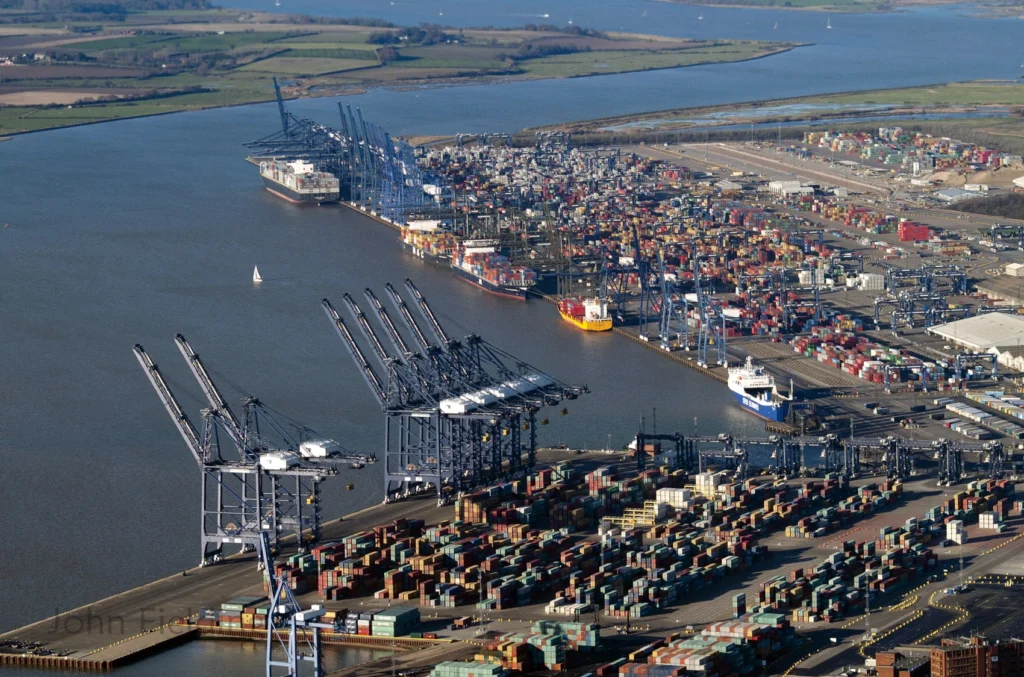
Felixstowe is the UK’s busiest container port, handling over 4 million TEUs annually. It serves as a major entry point for goods arriving from Asia and beyond.
Its deep-water berths accommodate the world’s largest vessels. And, the port connects to inland hubs via rail and the A14, providing access to the Midlands and beyond.
Felixstowe has nearby warehousing zones and a dedicated rail terminal. It’s an important hub for international trade, especially for businesses reliant on containerised freight.
4. Port of Southampton
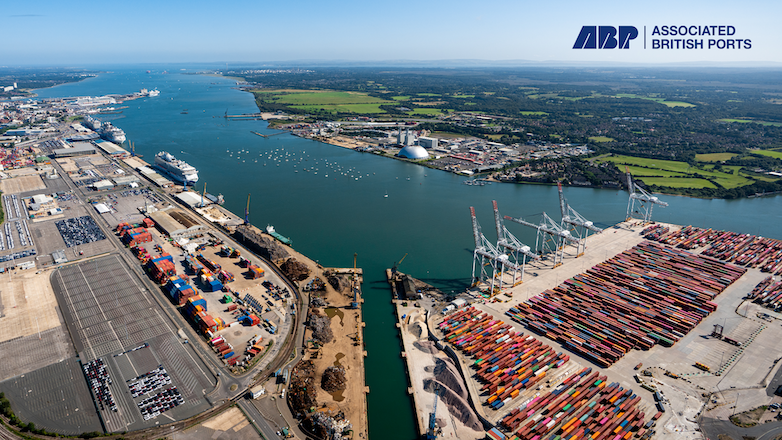
Southampton is a deep-sea port known for its automotive and container traffic. It’s also the UK’s second-largest container port after Felixstowe.
The port serves global shipping routes, particularly linking the UK with the Americas and the Far East. It’s a preferred choice for businesses moving high-value and time-sensitive goods.
With road and rail access to the Midlands and London, Southampton supports regional distribution. It’s also heavily used by the automotive sector for import and export.
For haulage and logistics operators focusing on global trade? Southampton is an indispensable southern gateway.
5. Port of Liverpool / Seaforth
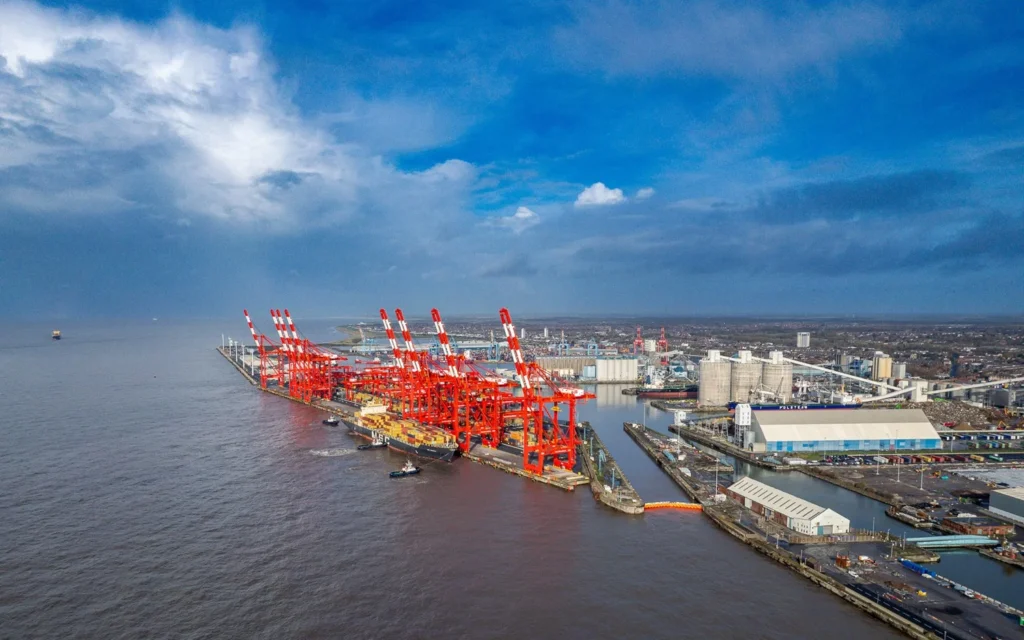
Liverpool is the principal west coast port and a growing alternative to southern ports. The Seaforth terminal supports containerised cargo and short-sea shipping.
The port links directly to the M62 and M6, facilitating easy access to the North West and Midlands. It also offers ferry routes to Ireland and transatlantic services.
Liverpool is increasingly used by freight forwarders due to reduced congestion and improved turnaround times, and it’s a valuable link in the UK’s north-south distribution system. Plus, the surrounding area has become a logistics cluster, supporting storage and dispatch for FMCG and retail.
6. The Humber ports (Immingham, Grimsby, Hull)
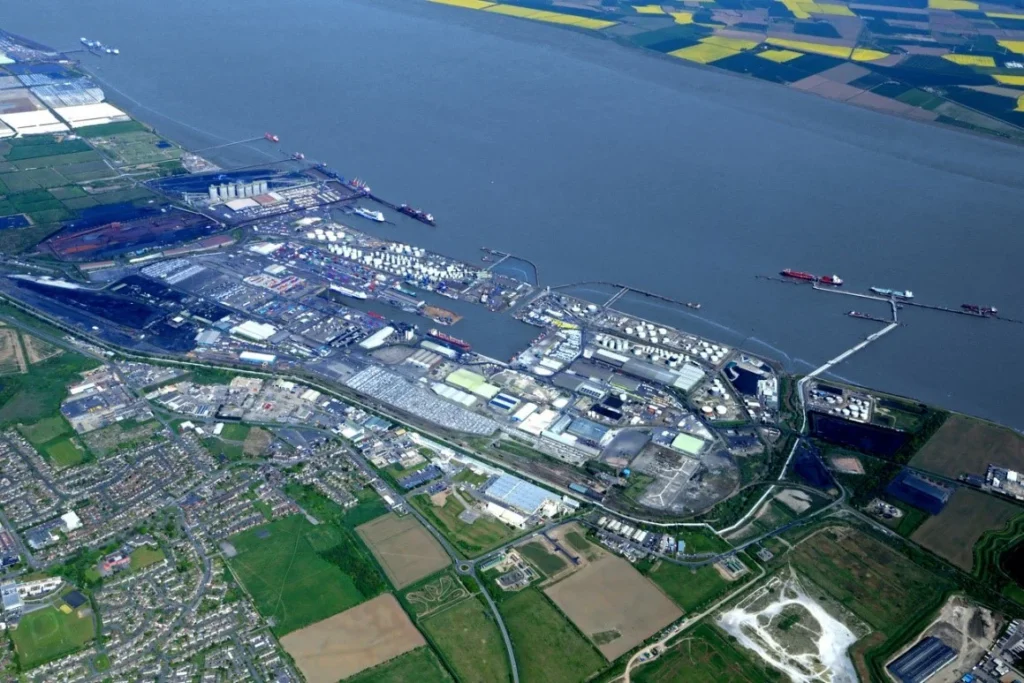
The Humber ports collectively form the UK’s largest port complex by tonnage. Immingham alone handles more than 55 million tonnes per year.
These ports are very important for bulk cargo, Ro-Ro services, and offshore energy supply chains. They serve sectors such as fuels, chemicals, cars, and foodstuffs.
Road and rail access connects these ports to Yorkshire, the East Midlands, and the North – plus, The Humber is also emerging as a hub for renewable energy logistics. For large haulage business operators serving the North, the Humber offers scale and sector diversity.
7. London Gateway & Thames Freeport
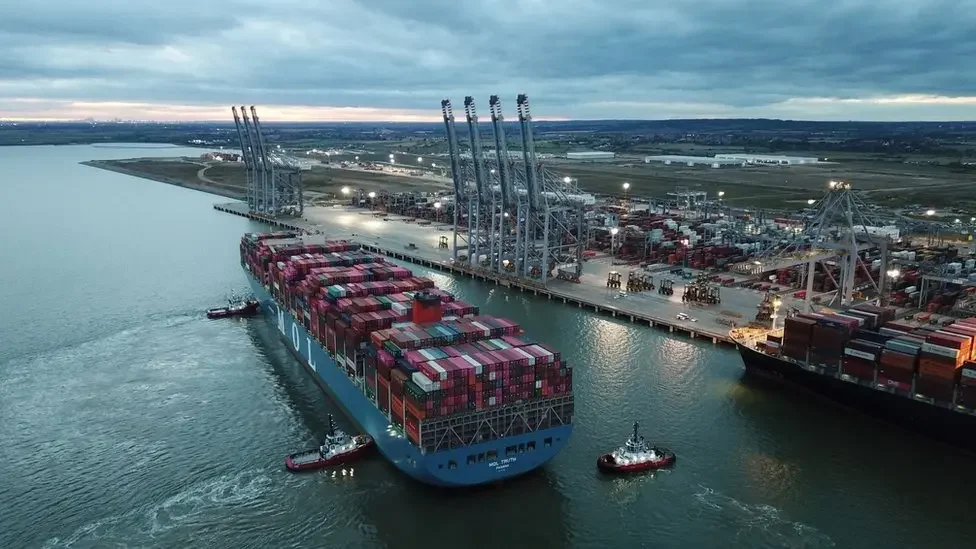
London Gateway is a modern deep-sea port operated by DP World. It’s part of the Thames Freeport, which provides tax and customs incentives.
The port is supported by a vast logistics park offering on-site warehousing. It’s also rail-connected and close to the M25, allowing for rapid movement into London.
As a newer facility, London Gateway is designed for automation and efficiency, and it supports both import-heavy and e-commerce focused supply chains. This hub is ideal for businesses looking for scalable logistics in the South East.
8. Heathrow Cargo & surrounding logistics cluster
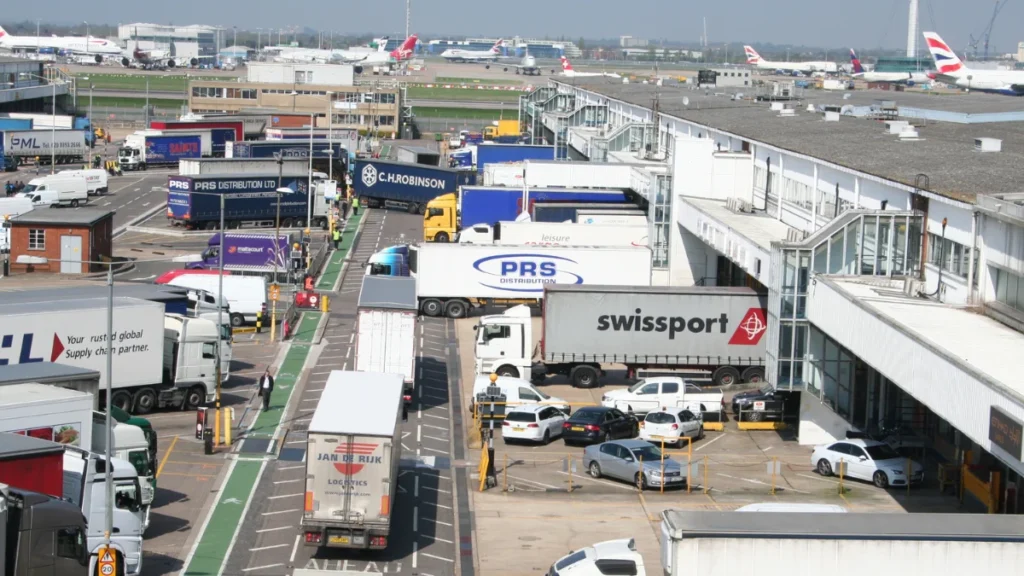
Heathrow is the UK’s largest air freight terminal, handling over 1.5 million tonnes annually. It’s essential for high-value, time-critical cargo.
Surrounding Heathrow are logistics parks, bonded warehouses, and courier hubs. This ecosystem supports fast processing and same-day dispatch.
Sectors such as pharmaceuticals, fashion, and electronics rely on air cargo. The Heathrow cluster plays a unique role in the UK’s multimodal logistics system, and for freight forwarders handling international freight, it’s an important hub.

Why these hubs dominate: location, access and infrastructure
Several factors explain why these hubs have risen to prominence. However, strategic location is the most obvious.
Many of the UK’s top hubs are situated near major motorways like the M1, M6, and M40. These allow easy north-south and east-west movement by road.
Rail links further boost intermodal capabilities. Sites like DIRFT and East Midlands Gateway, for example, demonstrate the value of combining rail freight with warehousing.
Other reasons include:
- HGV-friendly infrastructure and secure HGV parking
- Proximity to population centres or manufacturing zones
- 24/7 operational access
- Freeport or customs clearance advantages
- Local government and private sector investment
Together, these features reduce delivery times, and support large-scale operations. Plus, they also improve overall supply chain efficiency.
Regional breakdown: north, midlands, south and devolved nations
The Midlands remains the dominant inland region for logistics. Its central location supports nationwide delivery within tight timeframes.
Northern regions are seeing significant growth in warehousing and freight movement. Doncaster and Warrington are two examples of strong regional logistics centres.
In the South, ports and air hubs lead the way. Southampton, London Gateway, and Heathrow provide all-important links for international freight.
Scotland’s main logistics activity centres around Glasgow and Grangemouth. Wales has emerging logistics parks near Cardiff, while Belfast supports multimodal transport in Northern Ireland.
Emerging and rapidly growing hubs to watch
As demand grows, new hubs are gaining ground:
- Doncaster iPort: Offers road and rail connections with vast warehouse capacity.
- Teesport: Positioned for offshore, energy, and chemical logistics.
- Avonmouth (Bristol): Serving the South West with new distribution centres.
- East Midlands Gateway: Rapidly expanding hub for airport, rail, and road freight.
These locations are attracting investment due to their connectivity and available land. They’re particularly attractive to businesses seeking long-term growth outside traditional hotspots.
What sectors each hub serves
To understand the role of each logistics hub, it helps to know which industries they support. Different sectors rely on different modes of transport, storage types and distribution speeds.
Here’s a quick breakdown:
| Logistics hub | Main sectors |
| Golden Triangle | National retail, e-commerce, FMCG |
| DIRFT | Parcel networks, food logistics, rail freight |
| Felixstowe | Imports, manufacturing, consumer goods |
| Southampton | Automotive, containers, deep-sea routes |
| Liverpool / Seaforth | FMCG, Ireland/US exports, regional freight |
| Humber ports | Bulk transport, energy, offshore, automotive |
| London Gateway | Fast retail turnover, high-volume imports |
| Heathrow Cargo | Pharmaceuticals, electronics, luxury goods |
Some hubs are designed to serve a wide mix of industries. Others are highly specialised, offering temperature control, bonded storage or fast customs processing.
What this means for logistics operators and fleets
For any logistics business, location is a strategic choice. Where you base your vehicles, store goods or link up with couriers can impact your entire delivery model.
Operators with national routes benefit from basing near motorway-connected hubs. This reduces delays, improves routing and allows more flexible load planning.
Those focusing on import/export can save time and cost by using port-adjacent warehouses. Ports like Felixstowe or Liverpool are ideal for companies needing access to customs and international freight corridors.
Businesses using intermodal transport will prefer hubs with on-site rail links. These facilitate smoother transfers between long-haul and last-mile logistics.
Here are a few operational takeaways:
- Fleet planning: Hubs with good road access reduce dead mileage and allow tighter delivery windows.
- Warehouse decisions: Choosing a site near a major hub can cut lead times and support seasonal surges.
- Scalability: Emerging hubs often offer room for growth, lower rents and less congestion.
- Customer expectations: Using the right dispatch centre can help you promise next-day or same-day delivery more reliably.
- Partnerships: Many freight forwarders cluster near major hubs. Being close makes collaboration easier and more cost-effective.
Whether you’re an established firm or just starting a haulage company, hub choice matters. It affects everything from profitability to customer satisfaction.
Frequently asked questions
Which are the biggest logistics hubs in the UK by volume?
Felixstowe leads in container volume, followed by Southampton and London Gateway. Immingham handles the highest overall tonnage due to bulk and energy cargo.
Why is the Golden Triangle considered the UK’s leading logistics region?
It provides access to most of the UK within four hours and sits at the intersection of major motorways. Its dense concentration of warehouses and transport links makes it ideal for nationwide distribution.
What sectors rely most on the major logistics hubs?
Retail, automotive, pharma, e-commerce, fashion and FMCG are the biggest users. These sectors rely on fast, reliable and scalable logistics services.
What is the difference between a logistics hub and a distribution centre?
A logistics hub includes warehousing, intermodal connections and transport services in one zone. A distribution centre is typically a single facility within a wider hub.
What factors determine where new logistics hubs are built?
Transport links, land availability, labour force, and planning permissions all matter. Freeport status or tax incentives can also influence site selection.