If you’re new to haulage, palletised shipping is one of the most important concepts to understand.
A huge amount of freight in the UK moves on pallets. That includes retail stock, packaged food, building materials, industrial parts and wholesale goods. Instead of moving every item separately, businesses group goods onto a pallet so they can be handled as one unit.
That simple idea makes freight easier to load, easier to store and easier to transport. It also helps explain how goods move through depots, delivery networks and long-distance road freight operations.
This guide breaks down what palletised shipping means, how it moves through the haulage system, and when it’s the right fit.
What we’ll cover
Fleets, bookings, subcontractors, compliance & payments.
With HX, you can manage them all in one place.
What is palletised shipping?
Palletised shipping means transporting goods that have been stacked and secured on a pallet.
Once the goods are placed on the pallet, they’re usually wrapped in stretch film or secured with straps so the full load stays stable during handling and transport. The pallet and the goods on it are then treated as one shipment.
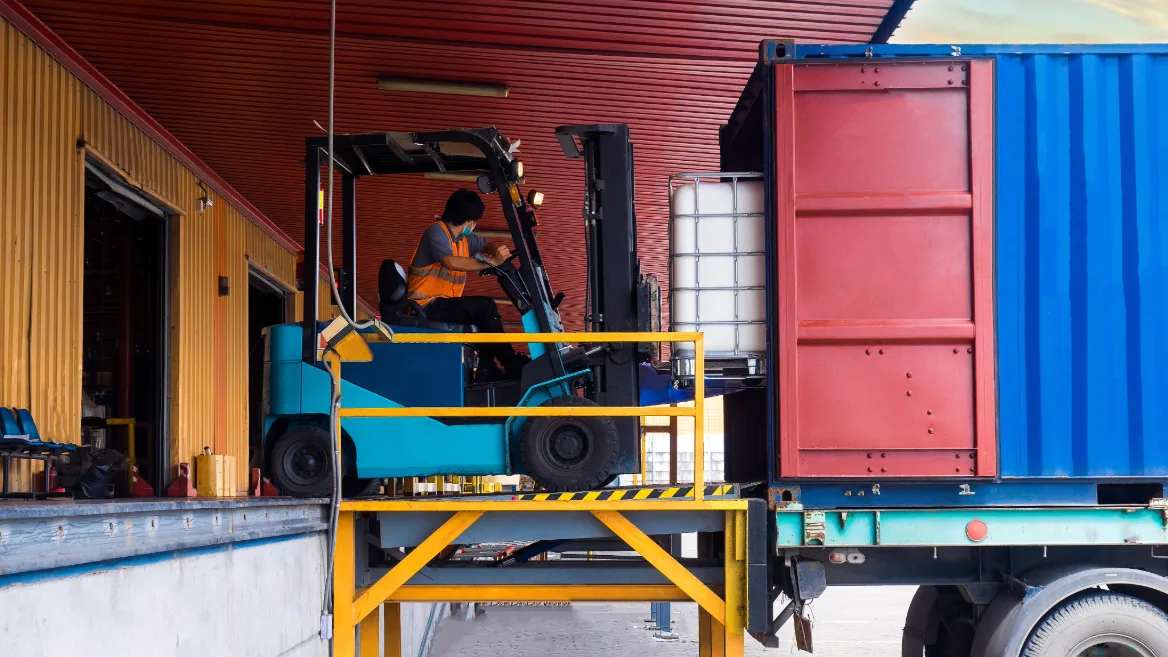
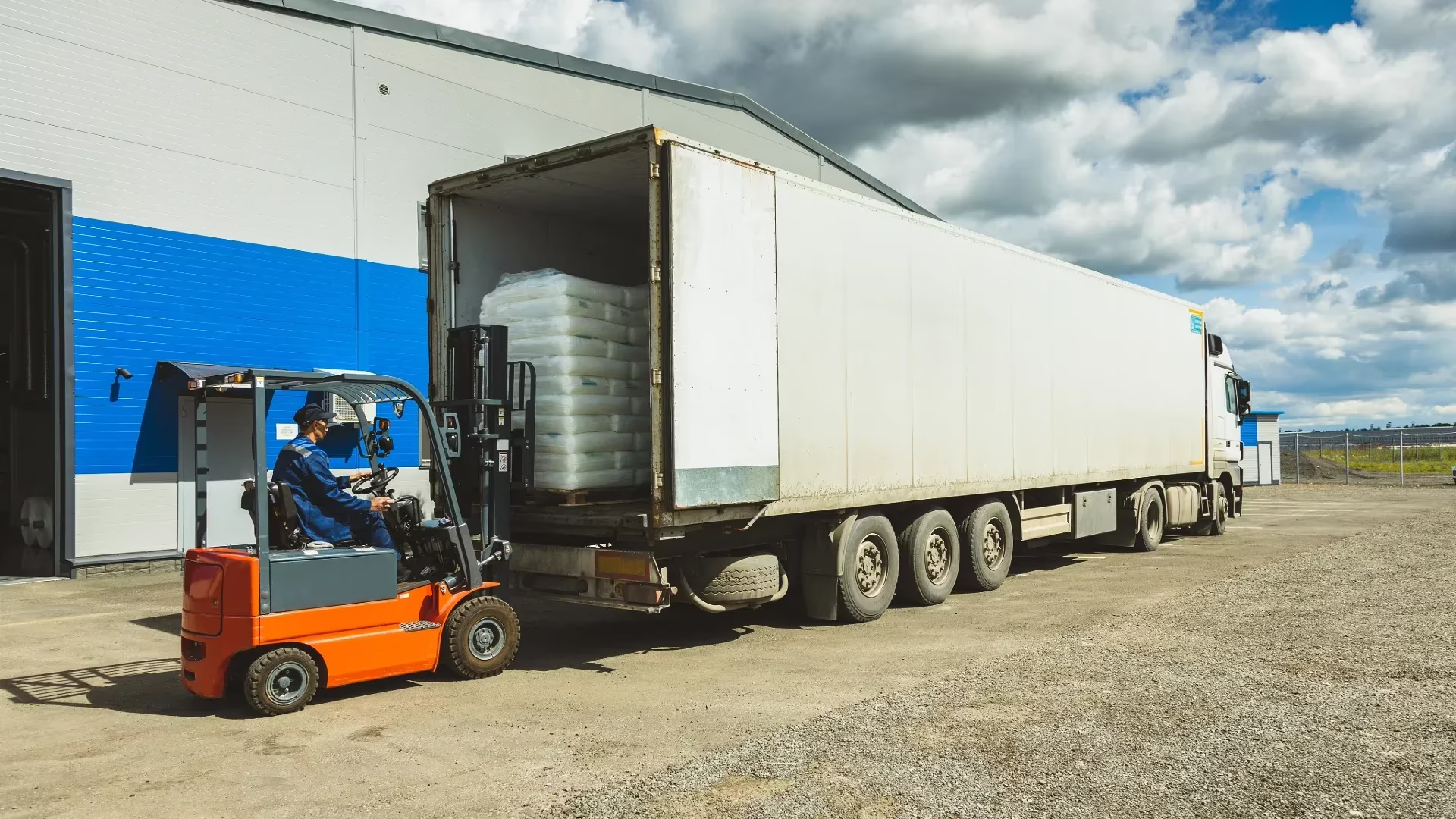
That matters because the whole load can be moved by forklift or pallet truck, rather than being lifted and handled box by box.
In practice, palletised shipping is used to make freight movements faster, more consistent and easier to manage across warehouses, depots and delivery routes.
What is a pallet?
A pallet is a flat platform used to support goods while they’re stored, moved and transported. Most pallets used in road freight are wooden, although plastic and metal pallets are also used in some sectors.
The key feature is the space underneath the pallet, which allows forks from a forklift or pallet truck to slide in and lift the load.
For beginners, the easiest way to think about a pallet is this: it turns lots of separate items into one manageable load.
Common pallet sizes
Two of the most common pallet sizes are:
| Pallet type | Typical dimensions | Notes |
|---|---|---|
| UK standard pallet | 1,200 x 1,000 mm | Common in UK distribution and warehousing |
| Euro pallet | 1,200 x 800 mm | Common across Europe and international supply chains |
These dimensions are widely used across the freight industry because they fit standard handling equipment and help businesses plan warehouse and trailer space more efficiently.
Why pallet size matters
The size of a pallet affects:
- How much freight can be loaded onto it
- How many pallets fit in vehicles
- How stable the load is
- How easily the pallet fits into racking or storage systems
For example, a standard 13.6-metre trailer will often be planned around pallet spaces. As a rough guide, it can usually carry around 26 standard UK pallets or 33 Euro pallets, depending on the loading pattern and the freight itself.
That’s one reason standardisation matters so much in palletised haulage.
Why businesses use palletised freight
Businesses use palletised freight because it makes goods easier to handle throughout the supply chain.
Faster handling
A forklift can lift a loaded pallet in seconds. That speeds up loading and unloading, especially when a site is handling multiple consignments in a short time.
Less repeated manual handling
Loose goods often need to be touched several times. A pallet reduces that because the freight is grouped together before the journey begins.
Better consistency
A properly built pallet is easier to store, easier to plan into a vehicle and easier to move between locations. That consistency helps depots and drivers work more efficiently.
Better fit for shared transport
Pallets are particularly useful when several smaller consignments are grouped into one vehicle. Standard load units make that much easier to manage.
How palletised haulage works
To understand palletised haulage, it helps to follow the load from origin to destination.
Step 1: The goods are stacked
The sender places the goods onto a pallet. Heavier items are usually placed at the bottom, with lighter items above. The load should be balanced, stable and within the pallet footprint where possible.
Step 2: The load is secured
The goods are then wrapped or strapped so they do not move during handling. If the pallet is unstable before it leaves the site, the rest of the journey becomes riskier.
Step 3: The pallet is collected
The load is collected by a haulier, a local depot vehicle or a pallet network member. From there, it may go directly to the consignee or move through one or more depots first.
Step 4: The freight moves through the network
At this stage, the pallet becomes part of the wider haulage system. It may be scanned, sorted and redirected depending on where it needs to go.
This is where internal beginner topics fit naturally into the picture. For example:
- A traffic office may coordinate vehicle movements, route planning and delivery schedules
- The pallet may move through cross-docking, where freight is transferred between vehicles with minimal storage time
- It may travel via a trunking network, where larger vehicles move freight between depots or regional centres
- it may pass through major logistics hubs before final delivery
Step 5: Final delivery
Once the pallet reaches the final depot or delivery vehicle, it is taken to the consignee and unloaded using the right equipment, such as a forklift, pallet truck or tail lift.
How pallet networks fit in
One of the biggest missing pieces in many beginner guides is pallet networks.
A pallet network is a shared distribution system where multiple hauliers work together to move palletised freight across different regions. Instead of one haulier covering the whole country alone, local members collect freight in their own area and pass it through a central or regional network.
That makes palletised shipping particularly useful for smaller consignments.
How a pallet network usually works
| Stage | What happens |
|---|---|
| Collection | A local haulier collects the pallet from the sender |
| Delivery to depot | The pallet goes to a depot for sorting |
| Trunk movement | The pallet is moved to another region, often overnight |
| Arrival at destination depot | The receiving depot sorts it for local delivery |
| Final mile | A local vehicle delivers it to the consignee |
This model helps businesses send one pallet or a few pallets without needing to hire a full vehicle for the entire journey.
For beginners, that’s one of the clearest reasons palletised freight matters. It doesn’t just make loading easier. It also supports the commercial model behind shared freight distribution.
Common pallet categories
There is no single universal rulebook for pallet categories because operators and networks can use different thresholds. Still, these are common labels you’ll see:
| Category | General meaning |
|---|---|
| Quarter pallet | Smaller consignment, often with reduced footprint or lower height |
| Half pallet | Mid-sized consignment |
| Full pallet | Standard full pallet load |
| Oversized pallet | Larger, taller or less standard palletised load |
These categories matter because they affect:
- Pricing
- Space planning
- Vehicle loading
- Handling requirements
A pallet isn’t only judged by its footprint. Height and weight often affect whether it still counts as standard.
Typical pallet heights and weights
This is an area where beginners often want simple numbers, but the honest answer is that it depends on the haulier, pallet network and type of freight.
Still, a few practical principles are useful.
Pallet height
Loaded pallets are usually assessed by:
- Base footprint
- Overall height once stacked
- Whether the load can still be handled and transported safely
A pallet that is too tall may be treated as oversized even if its base is standard.
Pallet weight
The safe weight depends on:
- The pallet itself
- How the goods are stacked
- The handling equipment at each site
- The acceptance rules of the operator
As a broad industry guide, many pallet movements are priced or categorised by weight bands rather than a single fixed limit. The important point for beginners is not the exact number. It’s that weight and stability go together. A heavy pallet that is poorly stacked is much riskier than a lighter, well-balanced one.
A practical rule of thumb
The load should:
- Sit securely on the pallet
- Remain stable when moved
- Avoid obvious leaning or overhang
- Stay within the limits accepted by the haulier or network
What makes a good pallet?
A lot of the success of palletised haulage comes down to how well the pallet is built before it leaves the site.
Signs of a well-built pallet
- Weight is spread evenly
- Heavier goods are at the bottom
- The stack is stable and upright
- There is little or no overhang
- Shrink wrap or strapping is secure
- Labels are visible
- The pallet is not damaged
Signs of a poor pallet
- The load leans to one side
- Boxes hang over the edges
- The base is weak or broken
- The stack is top-heavy
- The wrapping is loose
- The pallet looks unstable before it’s even moved
That may sound basic, but it has real consequences. A badly built pallet is more likely to collapse, get rejected, or arrive damaged.
What goods are usually moved as palletised freight?
Many everyday freight types are well suited to palletised freight, especially if they are boxed, stackable or uniform.
Common examples include:
- Retail stock
- Packaged food and drink
- Industrial components
- Cleaning products
- Hardware supplies
- Printed materials
- Boxed consumer goods
- Wholesale and trade supplies
These goods work well because they can usually be grouped into a stable load.
Goods that may not suit palletisation
Some freight is less suitable for palletised shipping, including:
- Very fragile items
- Irregular or awkwardly shaped goods
- Oversized machinery
- Very long products
- Freight that cannot be stacked safely
In those cases, specialist transport or a different loading method may be more appropriate.
The advantages of palletised shipping
Instead of repeating the same benefits in several sections, it helps to group them clearly.
Operational advantages
| Advantage | Why it matters |
|---|---|
| Faster loading and unloading | Saves time at depots and delivery points |
| Easier storage | Fits racking and organised warehouse layouts |
| Better planning | Makes vehicle space easier to manage |
| Easier movement | Works well with forklifts and pallet trucks |
Commercial advantages
| Advantage | Why it matters |
|---|---|
| Good for part-load freight | Businesses don’t always need a full vehicle |
| Works well in pallet networks | Supports shared regional and national distribution |
| Easier to price consistently | Standard units simplify quoting and planning |
| Scalable | One pallet or several can move through the same system |
The limits of palletised shipping
Although it is widely used, palletised shipping is not always the best fit.
It doesn’t suit every type of freight
Some goods are too fragile, too bulky or too awkward to sit safely on a pallet.
Access can be a problem
Not every delivery site has a forklift or pallet truck. Some deliveries may need a tail lift or extra handling support.
Pallet quality matters
A poor-quality pallet or unstable stack can undermine the whole process.
“Standard” does not always mean simple
Even standard pallets can vary by weight, height and load type, which is why operators still apply different pricing and acceptance rules.
Palletised shipping vs loose-loaded freight
A simple comparison helps show why palletisation is so widely used.
| Method | How it works | Best for | Main drawback |
|---|---|---|---|
| Palletised shipping | Goods are grouped on a pallet and moved as one unit | Regular business freight, part-loads, depot handling | Not ideal for all shapes or fragile loads |
| Loose-loaded freight | Goods are loaded as separate items | Awkward, irregular or low-volume freight | Slower handling and more manual work |
Loose loading still has its place, but in many commercial settings, palletised freight is easier to handle and easier to integrate into shared transport systems.
What affects the cost of palletised shipping?
There is no single flat rate for palletised shipping. Cost is usually affected by a mix of factors.
Main pricing factors
- Pallet size
- Pallet height
- Pallet weight
- Delivery postcode
- Collection postcode
- Standard or timed service
- Residential or commercial delivery point
- Need for a tail lift
- Whether the pallet is oversized or non-standard
That’s why pallet delivery costs can vary even between loads that look similar at first glance.
A full pallet going to a business with forklift access is usually easier to handle than an oversized pallet going to a site with limited unloading facilities.
Where pallets fit into wider haulage operations
Understanding pallets helps beginners make sense of a lot of other transport concepts too.
For example, when freight moves through depots or logistics hubs, palletised loads are easier to sort and redirect. When loads travel overnight between regions, that often links back to trunking. When vehicles are loaded and unloaded under time pressure, planning from the traffic office becomes critical.
There is also a site safety dimension. In busy yards or loading areas, trained banksmen may be used to help guide reversing vehicles and reduce the risk of accidents around freight movements.
And for anyone still learning the vehicle side of the industry, understanding HGV and LGV terminology also helps explain which types of vehicles are commonly used to move palletised loads.
Is palletised haulage right for your goods?
Palletised haulage is usually a strong fit when the goods are:
- Boxed or packaged
- Stable on a flat base
- Easy to wrap or strap
- Suitable for mechanical handling
- Moving through depots, warehouses or commercial delivery points
It may be a weaker fit when the goods are:
- Fragile and unstable
- Oversized
- Difficult to stack
- Awkward to unload at the destination
So the question is not whether pallets are “good” or “bad”. It’s whether palletisation fits the shape, weight, fragility and route of the freight you are moving.
Conclusion
Palletised shipping is one of the clearest building blocks in modern haulage.
At a basic level, it means placing goods on a pallet so they can be moved as one unit. But in practice, it does far more than that. It helps businesses handle freight efficiently, supports shared delivery networks, and makes it easier to move goods between depots, hubs and final delivery points.
That’s why palletised freight is such a central part of UK road transport. It is practical, scalable and well suited to the way commercial freight moves every day.
For anyone learning the basics of haulage, understanding palletised haulage is not just useful. It opens the door to understanding how the wider freight system works.
Frequently asked questions
What does palletised shipping mean?
Palletised shipping means transporting goods that have been stacked and secured on a pallet. The full load can then be moved as one unit using equipment such as a forklift or pallet truck.
What is the difference between palletised freight and palletised haulage?
Palletised freight usually refers to the goods once they are loaded onto pallets. Palletised haulage refers to the wider transport process used to move those palletised goods through the supply chain.
What size is a standard UK pallet?
A standard UK pallet is typically 1,200 x 1,000 mm. A standard Euro pallet is usually 1,200 x 800 mm.
How many pallets fit in a lorry or trailer?
It depends on the vehicle and loading pattern, but a standard 13.6-metre trailer will often be planned around around 26 UK pallets or 33 Euro pallets. Actual capacity can vary depending on the freight and loading method.
What goods are suitable for palletised freight?
Goods that are boxed, stackable and stable are usually well suited. Examples include retail stock, packaged food, industrial parts and wholesale supplies.
What affects the cost of palletised shipping?
Cost is usually affected by pallet size, weight, height, destination, service level and unloading requirements. Oversized or awkward pallets usually cost more than standard ones.