If you’ve ever booked pallet shipping in the UK, you’ve probably noticed how much the prices can differ. Whether you’re sending to Glasgow or Guildford, your final pallet delivery cost depends on more than just distance.
This guide breaks it down, helping you understand the cost structure, spot hidden fees, and uncover ways to save money without sacrificing service. It’s everything you need to make better freight decisions.
What we’ll cover
What drives price?
There are a few major factors that influence pallet shipping prices. Understanding them can help you cut costs from the start.
1. Distance travelled
The further your pallet has to travel, the more you’ll pay. Longer distances mean higher fuel costs, driver hours, and possibly overnight stops.
Some networks use “delivery zones” based on postcodes, which can push up costs for remote or underserved regions. If your delivery crosses regions or national borders, expect extra fees.
2. Size, weight, and pallet type
Pallets are priced differently depending on their size and weight. A standard UK pallet is 120cm x 100cm, but if your load goes over that, you’ll be charged extra.
Pallets are commonly classified as:
- Quarter pallet: Ideal for smaller items up to 250kg
- Half pallet: For medium loads, usually up to 500kg
- Full pallet: For loads up to 1000kg (standard)
- Oversized pallet: Anything exceeding weight or dimensions
If your load hangs over the edge or exceeds weight limits, you’ll be charged for the next class up, or worse, hit with oversized pallet penalties. Accurate measuring helps avoid this.
3. Delivery speed and service level
Delivery timing plays a big role in cost. The faster you need it, the more you’ll pay.
Options include:
- Economy (2-3 day): Cheapest, suitable for non-urgent deliveries
- Next-day delivery: More expensive, but ideal for tight deadlines
- Timed delivery: Guarantees a specific time slot, useful, but costly
- Same-day or premium delivery: Highest price, often custom quoted
4. Access issues and location surcharges
Some locations are harder to reach, and that affects the price. This includes city centres, islands, remote rural areas, and restricted access zones.
Expect extra charges for:
- London Congestion Zone or Ultra Low Emission Zone (ULEZ) deliveries
- Farms, building sites, or residential addresses
- Business parks with access restrictions or gates
- Highlands, islands, or outlying postcodes
Surcharges to watch: tail-lift, restricted access, waiting time, and redelivery
These often catch people out. While they vary by provider, these add-ons are common across the board.
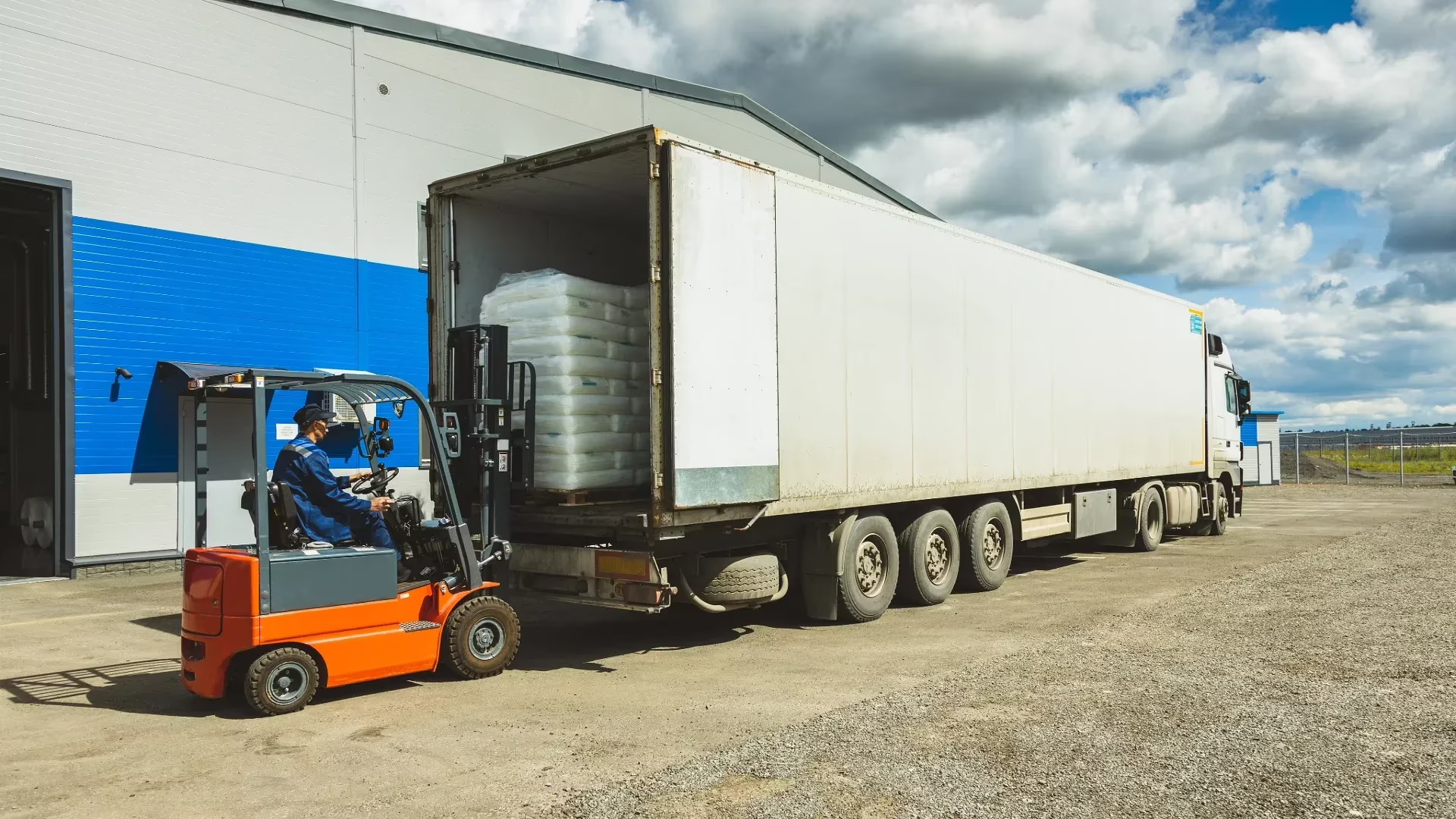
- Tail-lift required: If no forklift is available, a hydraulic lift will cost extra
- Redelivery: If no one’s present or the site is closed, you’ll pay to try again
- Waiting time: Drivers typically charge in 15-minute increments while waiting
- Booking fees: Some sites require timed bookings, with admin costs
- Fuel surcharges: Often added when fuel prices spike
Remember to check the small print. Plus, always confirm what’s included in the quote upfront.
Packaging and palletisation: Why it matters
Good packaging isn’t just about protecting your items. It can help avoid excess charges and improve delivery reliability.
Here’s how to package for cost efficiency:
- Keep to standard pallet sizes, don’t let items overhang
- Wrap and stack securely to avoid shifting in transit
- Distribute weight evenly to reduce tipping risk
- Use reusable pallets where possible to save long-term
A poorly packed pallet may be rejected or reclassified, increasing your costs. For tips on warehouse best practices, see our guide on recycling and pallet reuse in logistics.
Documentation and labelling: Avoid costly mistakes
Documentation errors can delay deliveries or even result in fees. Even domestic pallet shipments need proper paperwork.
What’s typically required:
- Consignment note with full sender/receiver details
- Barcode or QR label to track each pallet
- Delivery instructions including site access, open times, or hazards
- Customs declarations for international shipments (EU or beyond)
Labelling must be legible, waterproof, and securely attached. A wrong address or missing number could lead to missed deliveries or reprocessing fees.
Location effects: city centres, remote areas, and postcode surcharges
Location is a major factor in how your pallet delivery cost is calculated. Urban areas often mean limited access, loading restrictions, or congestion charges that can add to your bill.
Remote or rural destinations may also attract surcharges due to extra fuel and travel time. Hauliers and courier drivers often pass these costs on in the form of postcode-based pricing tiers.
Be aware of these regional quirks when budgeting. Some delivery networks offer postcode maps or pallet delivery cost calculator tools to help estimate costs before booking.
LTL vs FTL: And when to use LCL
Less-than-truckload (LTL) shipping is ideal when your goods don’t fill an entire trailer. It’s more cost-effective and sustainable because loads are shared with other shippers.
Full truckload (FTL) is better for larger deliveries or sensitive goods that shouldn’t be handled repeatedly. It’s often faster and avoids depots altogether.
In some cases, especially with international deliveries, you might consider less-than-container load (LCL) shipping. This works like LTL but for sea freight, and is useful for mixed cargo.
Choosing providers: coverage, technology, tracking, and customer support
Not all pallet carriers are equal. Some specialise in regional deliveries, while others offer broader UK or EU-wide coverage, so choose based on where your pallets are going.
Look for hauliers that provide real-time tracking, digital booking, and proactive communication. These features improve delivery accuracy and save your team time.
Last but not least, customer service is all-important when something goes wrong. The right provider should offer easy support access, fair redelivery policies, and transparent pricing structures.
How to compare pallet delivery quotes
Don’t just compare pallet shipping prices on headline rates. Look at what’s included in the quote and ask about possible surcharges for things like waiting time or tail-lifts.
Request itemised breakdowns so you can see exactly where your money is going. This helps you identify if another provider is cheaper or just cutting corners.
Also check who’s handling the delivery. Some providers use partner networks or subcontracted haulage vehicles, which can affect service levels and communication.
Ways to lower pallet delivery costs without reducing service quality
You don’t need to cut corners to bring down your pallet delivery cost. Instead, smart planning, better processes, and the right partners can make a big difference.
- Consolidate shipments: Try to send full pallet loads rather than multiple part loads where possible. Fewer collections and deliveries mean fewer handling fees and reduced fuel costs.
- Use standard pallet sizes: Sticking to standard UK or Euro pallet dimensions helps avoid awkward overhangs and wasted space. It also prevents misclassification and potential surcharges.
- Improve packaging efficiency: Stack items safely and make full use of pallet height allowances. This reduces the number of pallets needed and lowers overall pallet shipping cost.
- Use pallet networks or exchanges: These platforms reduce empty miles and match loads with return journeys. Not only does this support sustainability, but it can also lower pallet shipping prices.
- Book in advance: Last-minute bookings often limit your options to premium services. Early booking gives you access to cheaper economy or off-peak rates.
- Choose the right service level: Don’t pay for a timed or premium service if an economy option will do. Review your clients’ real delivery needs to avoid unnecessary extras.
- Partner with trusted providers: Reliable hauliers minimise the risk of redelivery fees, damage, or delays. Using a vetted network also helps small and large haulage businesses stay competitive.
- Reduce failed deliveries: Make sure the site is accessible and staffed within the booked time window. This avoids extra costs for redelivery, waiting time, or restricted access.
- Invest in reusable pallet systems: Switching to durable or recyclable options can reduce long-term spend. These are often lighter, easier to handle, and more eco-friendly too.
Site readiness: equipment, staffing, and booking windows
Make sure your site is ready when the pallet arrives. This means having forklifts or tail-lift access, plus staff available to load or unload quickly.
Booking windows should be realistic; don’t underestimate how long a delivery will take. Clear access and signage will also reduce confusion and save you from extra charges.
These steps improve delivery success rates and reduce admin headaches. If you’re running a small haulage business, even minor delays can hit your bottom line hard.
Frequently asked questions
Why do pallet delivery quotes vary so much between providers?
Some hauliers specialise in certain routes or regions, which lets them price more competitively. Others may charge more because they offer extra tech, faster delivery, or better service.
How do distance and postcode zones influence pallet delivery cost?
Longer distances generally cost more due to fuel and driver time. Postcode zoning adds complexity; city centres and remote areas often come with extra fees.
Does pallet size change the delivery price?
Yes, it does. Larger or irregularly shaped pallets take up more room in the truck and may need special handling.
What surcharges should I watch out for?
Common ones include tail-lift, waiting time, redelivery, and restricted access fees. Always read the small print on your quote.
What documentation is required for pallet delivery?
You’ll typically need a consignment note and clear labelling on the pallet. Depending on the route, a commercial invoice or customs forms may also be required.